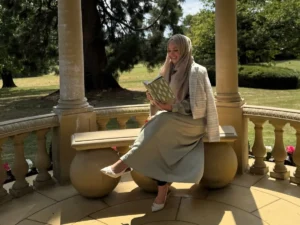
Ramadan Moon Sighting
Every year as Ramadan begins, moon wars commence! Everyone is asking, when does Ramadan 2026 begin? What if I told you, it never needs to be a war? What if it doesn’t need to be debated, but witnessed with the heart’s full conviction? In Allah’s Mercy, there are valid opinions for following both international moon sighting and local moon sighting. However the issue extends beyond fiqh alone. Following our own opinions, erodes away unity in family units and the community. After all, Allah tells us not to follow Islam “blindly”.
Choosing A Ruling for Ramadan Moon Sighting
Early Muslims who were the companions of The Prophet ﷺ (sahaba) didn’t follow their own instincts or opinions on the matter of lunar cycles. Rather, they would follow the announcements of the leaders in their communities, or simply sight the moon for themselves. Once news of the arrival of the new moon was confirmed by a trustworthy source, Ramadan was confirmed to begin. In each individual city, Ramadan and Eid were united.
In non-Muslim countries, Muslims largely lack this leadership, which gives rise to fragmented following of different rulings. This causes a “split” Ramadan or Eid even within families. People grip onto the ruling they feel safest with, at the expense of the family unity. Let’s be honest, ego often plays a factor in this too!
Frequently driven by emotion, some want to follow Saudi as they feel attached to the cycle of worship there from their memories of performing Hajj and Umrah. Some seek alignment with their ancestral lands. Others want to sight the crescent for themselves locally, as they feel this is closely aligned to the practise of the early Muslims. Every one of these experiences is valid. What many accidentally overlook, regardless of which ruling we follow, is the importance of unity within the Ummah.
A Movement in British Moon Sighting
In recent years, award winning Imad Ahmed PhD candidate of Cambridge founded the organisation New Crescent Society. They provide British Muslims with the Islamic guidance, science and logistics to sight the new moon of each month of the Hijri year, in Britain. For the first time since becoming Muslim, last year I followed their guidance and resources to sight the moon for Eid al-Fitr. The beauty of this evening has stuck with me. It felt like the perfect way to welcome Eid. Furthermore, the revival of this ancient practice has the ability to unite British Muslims under the lunar calendar.
Moon Sighting, Islam and British Culture
Imad Ahmed highlights that moon sighting lies deep within our human DNA. Moon sighting has existed in British culture since as far back as 8000bc, when ancient records began for tracking the lunar cycle. Timekeeping, agriculture and rituals were influenced by the moon’s phases. Stones were laid down to mark observations.
It is certainly no accident that Islam is aligned to the lunar calendar, as Islam resonates deep with the natural cycles of human nature. Recently, New Crescent Society hosted a moon sighting for the month of Jumada II, at the iconic Stonehenge. This is due a rare celestial event, where the moon is aligned above both the Kaaba in Mecca and Stonehenge in Wiltshire. Britain and the lands in which Islam was revealed, are therefore connected through celestial alignment and the practise of moon sighting itself.
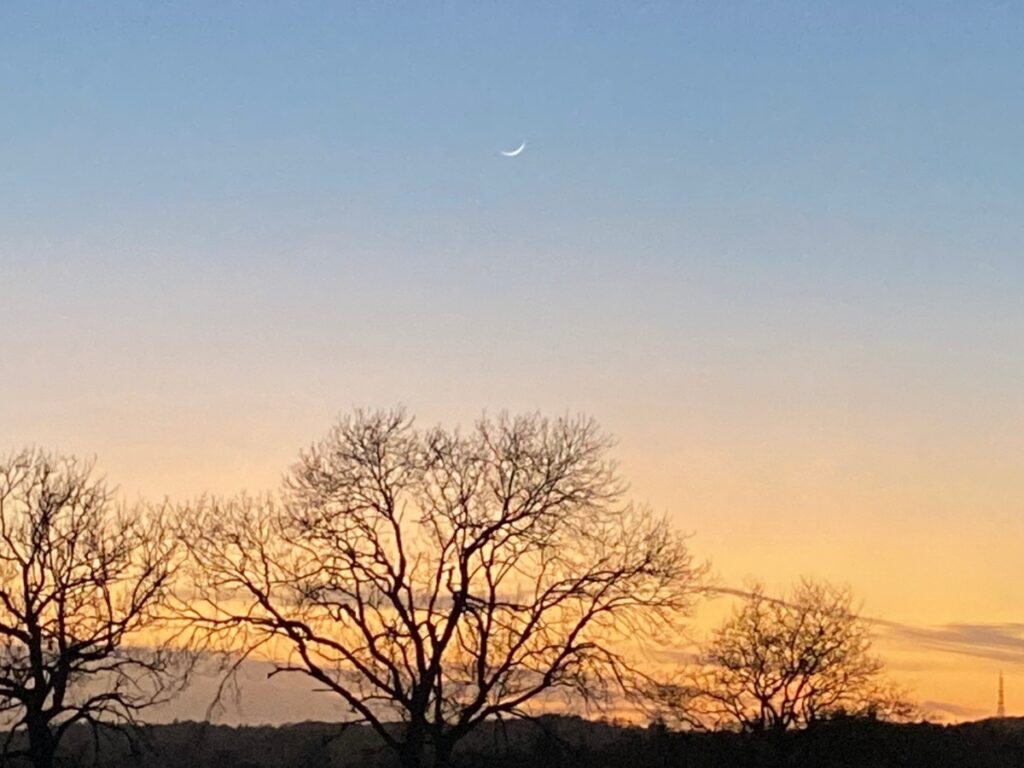
Sighting The Moon on The Last Night of Ramadan
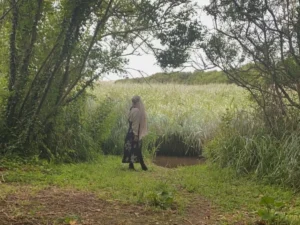
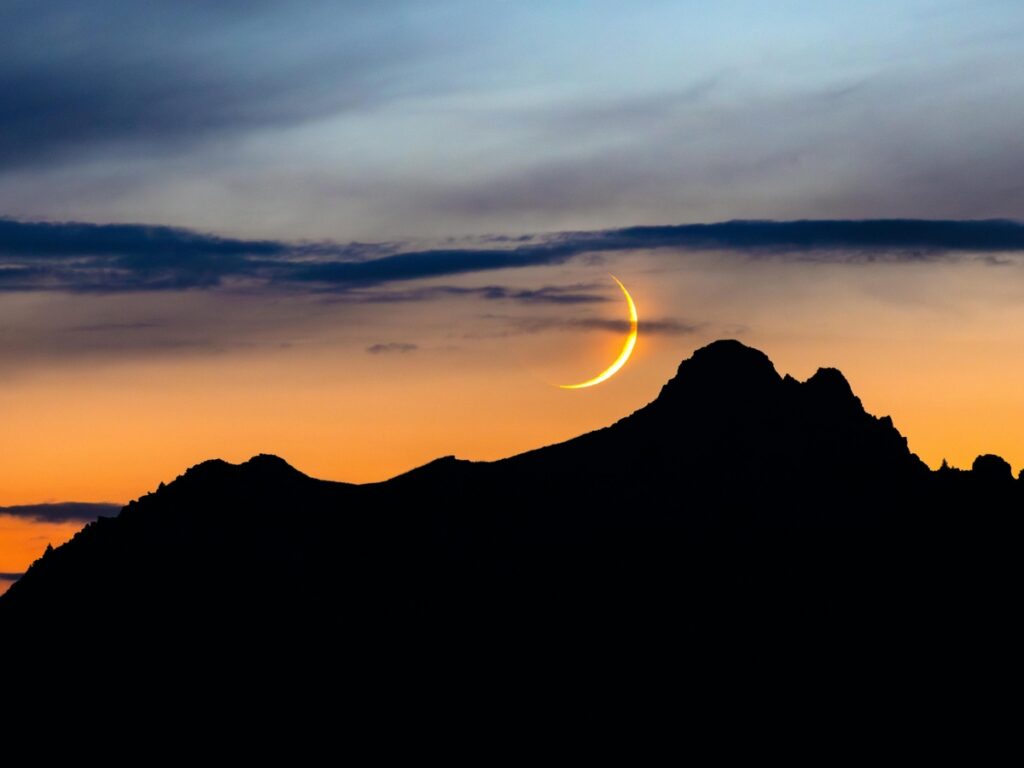
Flask of tea, dates and cake in hand, heading out to sight the moon from a local vantage point feels like an adventure. Getting out into nature, with community and family is the perfect way to welcome Ramadan and Eid. My parents aren’t Muslim, but I brought them along anyway. That night we were blessed with the new moon of Shawwal – Eid Mubarak! We all appreciated the purity of the moment in witnessing the birth of a new crescent in nature.
The moon and its natural cycle is something we take for granted. Going to sight the moon for Eid helped me to connect not just to the lunar cycle and the moon itself, but also to Eid and The Prophet ﷺ in a way I had never done so before. Don’t you think the fragmentation of Ramadan and Eid in the UK is by design? It keeps us distant, separated and busy debating instead of peacefully worshipping. Local moon sighting is an act of worship. Finding full faith in Allah’s celestial beings, is empowering!
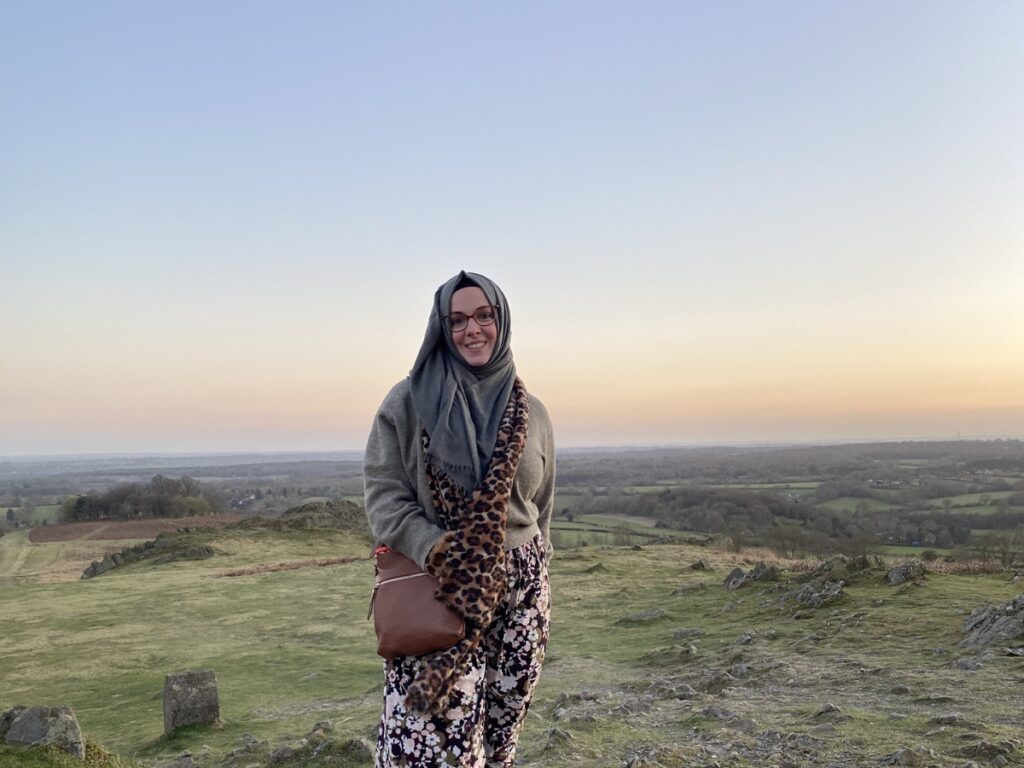
Unfortunately certain people who attended littered their Iftar packaging, leaving a few of us to begrudgingly clean up after them. This is not the fault of New Crescent Society. It’s crucial to only attend if you are responsible enough to uphold the utmost respect for nature and the environment, or not attend at all. Sadly, they weren’t children.
Connecting to Ramadan Through The Moon
Although you can follow the international sighting (from a reliable source), it is a beautiful experience to sight the moon for Ramadan for yourself. I sincerely hope Muslims across Britain embrace this ancient tradition of moon sighting and unite for the sake of peace and celebration for Ramadan and Eid respectively. So when is Ramadan in Britain? The truth is, Allah knows! Revive the Sunnah. Look out for the new moon and begin the blessed month of Ramadan with this beautiful ancient practise!
Visit New Crescent Society’s website to find out where you can go to locally sight the moon in your area and access their insightful resources.
Will you be going out to sight the moon for Ramadan? Let me know in the comments below!